Flower Emojis: A Copy-and-Paste Guide to Every Bloom and Meaning
This page is a ready-to-copy reference of flower emojis, built so you can grab a glyph and go. Every entry pairs the emoji with its official Unicode name, a quick meaning, and a note on how it tends to read in a message or caption.
Beyond the copy list, you’ll find:
- What each flower emoji actually signals in a text, DM, or comment
- Insertion shortcuts for Windows, macOS, iOS, Android, and Outlook specifically
- Decorative flower text and kaomoji combos for bios and captions
- Etiquette guidance on when a bloom belongs in a message and when it doesn’t
Two quick examples of how people actually use these: dropping a single 🌻 under a friend’s summer photo, or tucking a 🌷 into an email subject line to soften a check-in note. Both work. The rest of this guide shows you why.
Key Takeaways
Flower emojis communicate specific emotional registers, from romance to grief, and choosing the wrong one shifts a message’s meaning more than most people realize.
| Point | Details |
|---|---|
| Ten core flower emojis | Rose, cherry blossom, hibiscus, wilted flower, sunflower, blossom, tulip, lotus, rosette, and white flower cover nearly every common use case. |
| Meaning drives selection | Rose signals romance, wilted flower signals heartbreak, sunflower signals encouragement; match the emotion, not just the aesthetic. |
| Windows shortcut is universal | Win + . or Win + ; opens the OS-level picker in Outlook subject lines and message bodies alike. |
| Rendering varies by platform | The same emoji can look different on iOS, Android, and older Outlook clients, so preview before sending to mixed audiences. |
| Emojitrove speeds the search | Emojitrove’s searchable library lets you copy the exact flower emoji and check its meaning without scrolling a full keyboard grid. |
Table of Contents
- The Complete Flower Emoji List: Copy, Paste, and Go
- What Do Flower Emojis Mean in Everyday Messages?
- How to Insert Flower Emojis on Windows, Mac, and Outlook
- Flower Emoji Combos and Decorative Text for Captions
- When to Use Flower Emojis (and When to Skip Them)
- Why a Good Flower Emoji List Still Matters
- Copy Flower Emojis Faster With Emojitrove’s Search Tools
- Sources
- FAQ
The Complete Flower Emoji List: Copy, Paste, and Go
Every flower emoji below is ready to select and copy directly from this page. Each entry includes the Unicode name, which is the official identifier recognized across every platform and keyboard, so you know exactly what you’re pasting even if it renders a little differently on your friend’s phone.
Single-flower glyphs
These are the workhorses of floral messaging. Tap or click to copy.
- 🌹 Rose (U+1F339, Unicode name “Rose”) — the most recognized flower emoji, tied almost universally to romance and deep affection.
- 🌸 Cherry Blossom (U+1F338, Unicode name “Cherry Blossom”) — Japan’s sakura symbol, now shorthand for spring, renewal, and gentle beauty anywhere in the world.
- 🌺 Hibiscus (U+1F33A, Unicode name “Hibiscus”) — a bright tropical bloom that reads as vacation, warmth, or exotic flair.
- 🥀 Wilted Flower (U+1F940, Unicode name “Wilted Flower”) — a drooping rose that signals heartbreak, sadness, or something fading.
- 🌻 Sunflower (U+1F33B, Unicode name “Sunflower”) — bright, tall, and optimistic; the go-to for cheerful or supportive messages.
- 🌼 Blossom (U+1F33C, Unicode name “Blossom”) — a simple yellow-centered daisy often called the “daisy emoji” in casual speech, used for innocence and everyday sweetness.
- 🌷 Tulip (U+1F337, Unicode name “Tulip”) — a single stem tied to spring, elegance, and understated affection.
- 🪷 Lotus (U+1FAB7, Unicode name “Lotus”) — a newer addition (Unicode 14.0) representing purity, spiritual growth, and calm.
Ornamental and multi-petal glyphs
These sit slightly apart from the “real flower” category. They’re stylized, often used for decoration, rank markers, or formal design rather than a literal bloom.
- 🏵️ Rosette (U+1F3F5, Unicode name “Rosette”) — a decorative badge-like flower, often used for awards, ribbons, or ornamental flourishes rather than an actual plant.
- 💮 White Flower (U+1F4AE, Unicode name “White Flower”) — originally a Japanese “well done” stamp used on schoolwork; now a stand-in for a perfect score or a small congratulatory flourish.
Related floral and nature symbols worth knowing
A few adjacent symbols get lumped into “flower emoji” searches even though they’re technically foliage or seasonal markers. Worth having on hand for fuller bouquets and nature-themed posts.
- 🌱 Seedling (U+1F331) — new beginnings, growth, or a “just planted” moment.
- 🍀 Four Leaf Clover (U+1F340) — luck, often paired with floral combos for St. Patrick’s Day or good-wish messages.
- 💐 Bouquet (U+1F490) — a full arranged bunch, typically several stems tied together; the default choice for congratulations or thank-you notes.
- 🌾 Sheaf of Rice (U+1F33E) — harvest and abundance, common in autumn posts.
When you’re building a caption or a themed set, grouping single blooms separately from the ornamental and bouquet-style glyphs makes scanning faster. A rose and a rosette look similar at a glance but carry very different weight: one says “I love you,” the other says “certified” or “award-winning.” If you need the full searchable set with instant copy, Emojitrove’s emoji meanings library organizes flower and nature symbols by theme so you’re not scrolling a single long list to find one glyph.
What Do Flower Emojis Mean in Everyday Messages?
Flower emojis carry more emotional shorthand than almost any other emoji category, and picking the wrong one can shift a message’s tone more than people expect. Here’s what each one typically signals, and where it tends to show up.
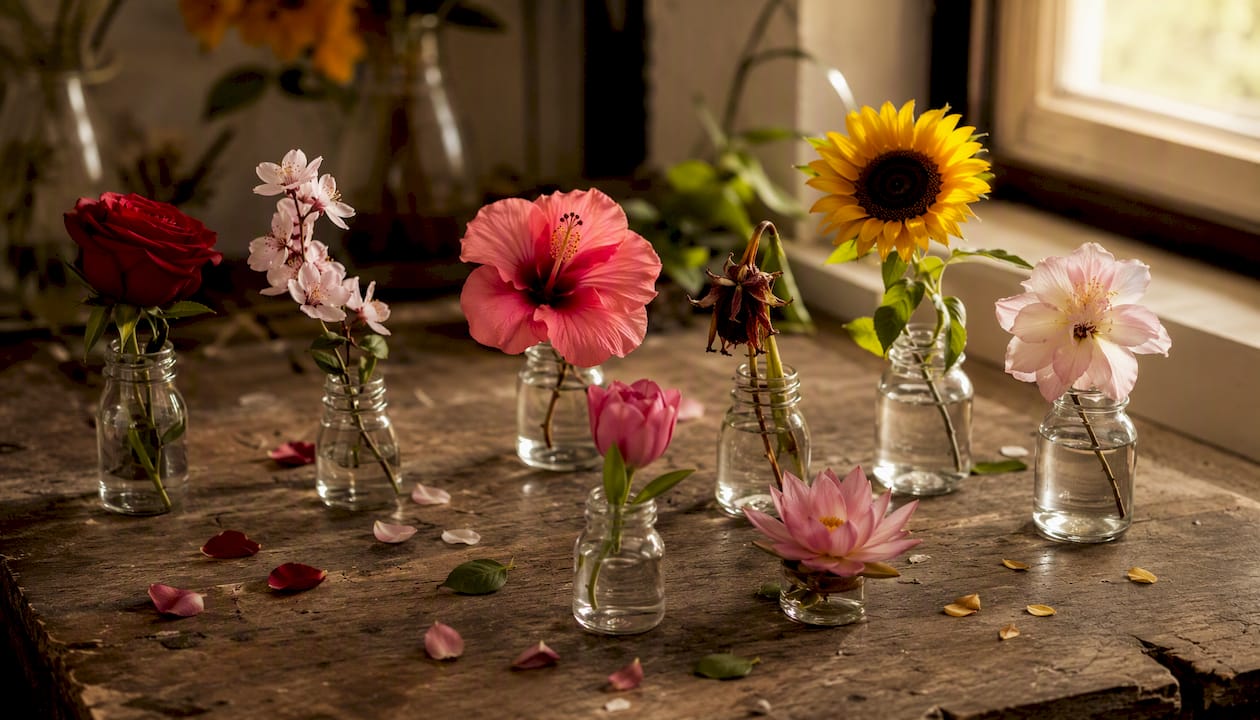
🌹 Rose is the default symbol for romantic love, admiration, and passion. A single rose under a photo usually reads as flirtation or genuine affection: “You looked stunning last night 🌹” lands very differently than the same line without it. It also shows up in sympathy contexts (funeral flowers) and in luxury or beauty branding, so context matters.
🌸 Cherry Blossom signals renewal, fresh starts, and fleeting beauty, drawing on its cultural weight as Japan’s sakura. It’s common in spring announcements, new-chapter posts (“new job, new city 🌸”), and gentle, calming captions. It rarely carries romantic weight the way the rose does.
🌺 Hibiscus means tropical, vibrant, or celebratory in most casual use. If someone texts “landed in Hawaii 🌺” or captions a beach photo with it, they’re leaning on its association with warmth and vacation energy. In text messages generally, 🌺 reads as upbeat and a little exotic, not sentimental.
🥀 Wilted Flower is one of the more emotionally loaded glyphs on this list. A string like 🥀🥀🥀 typically signals heartbreak, mourning, nostalgia for something lost, or a dramatic “things didn’t work out” statement, often used ironically in captions about a breakup or a rough week. It’s the anti-rose: same flower, opposite emotional register.
🌻 Sunflower reads as warmth, encouragement, and optimism. It’s a favorite for supportive comments (“thinking of you 🌻”), summer posts, and messages meant to lift someone’s mood without romantic undertones.
🌼 Blossom, often called the daisy emoji in everyday speech, signals simplicity and cheerful innocence. It works well in casual, low-stakes messages, kids’ content, or spring-themed captions where you want something lighter than a rose but friendlier than a plain checkmark.
🌷 Tulip carries quiet affection, spring freshness, and elegance without the intensity of a rose. It’s common in “thinking of you” texts, Mother’s Day posts, and understated romantic gestures.
🪷 Lotus leans spiritual and calm, tied to mindfulness, meditation, and personal growth content. You’ll see it in wellness captions and posts about overcoming hardship, since the lotus famously grows through mud.
🏵️ Rosette and 💮 White Flower function more as decorative or achievement markers than emotional symbols. A 🏵️ often dresses up a list or award mention; a 💮 signals a job well done, drawing on its origin as a Japanese “excellent” stamp on schoolwork.
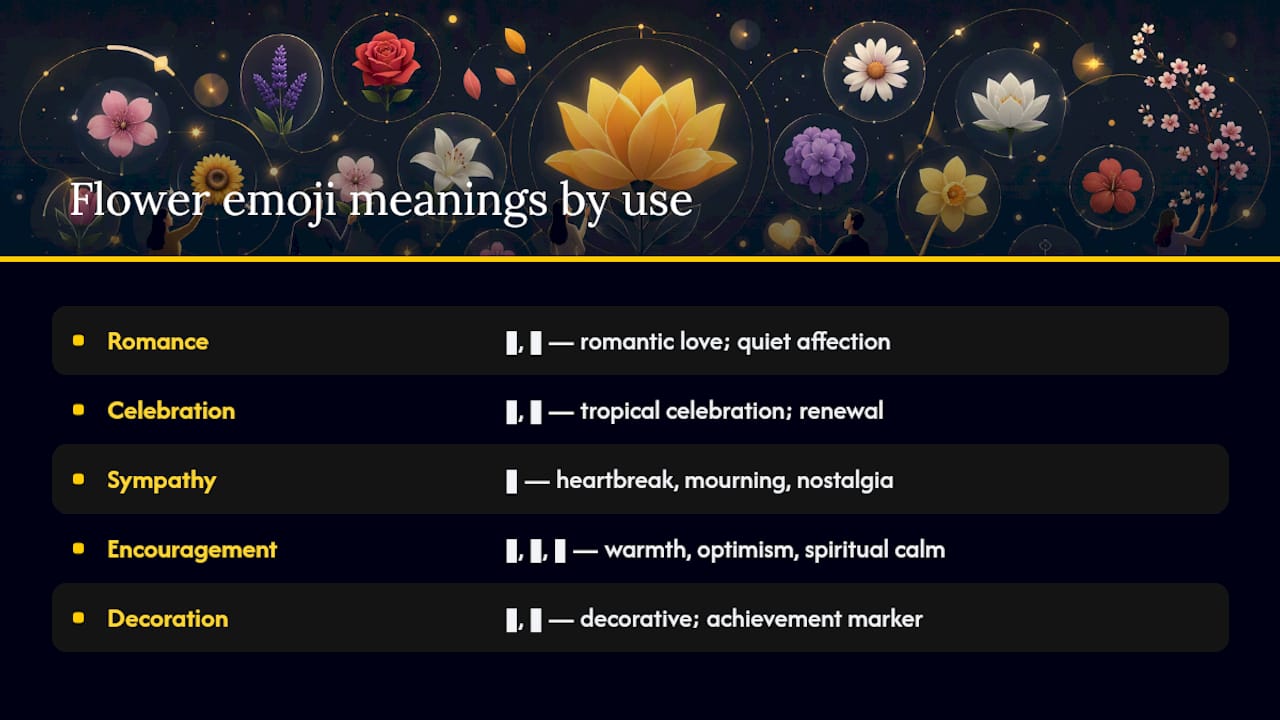
Pro Tip: If you’re not sure which flower fits your message, ask whether you’re expressing romance (🌹, 🌷), encouragement (🌻), sympathy or sadness (🥀), or celebration (💐, 🏵️). Matching emotional register to the right bloom avoids the awkward mismatch of, say, sending a wilted flower to congratulate someone.
A few quick answers to common questions people search for. What does 🥀 mean? On its own or repeated, it almost always signals heartbreak, sadness, or something that has faded, the emotional opposite of a fresh rose. What is 🌼 called? Officially it’s “Blossom” in the Unicode standard, though most people call it the daisy emoji. What does 🌺 mean in text? Hibiscus usually signals tropical vibes, celebration, or vacation energy rather than romance.
How to Insert Flower Emojis on Windows, Mac, and Outlook
Getting a flower emoji onto the screen depends entirely on your device and the app you’re typing in. The good news: most platforms have a fast, built-in shortcut that doesn’t require leaving your keyboard.
On Windows 10 and 11, pressing Windows key + . (period) or Windows key + ; (semicolon) opens the system-wide emoji picker with a search box and category tabs. This works in nearly any text field, which matters because it’s an operating-system feature, not an app feature. That’s why it opens inside an Outlook subject line just as reliably as it does in a Word document or a browser search bar.
On macOS, Control + Command + Space opens the Character Viewer, Apple’s equivalent picker with search and recent-emoji tracking. On iOS and Android, tapping the emoji key on the on-screen keyboard (usually a smiley icon next to the space bar) switches you into the emoji keyboard, where flower glyphs live under the “Nature” or “Animals & Nature” category.
| Platform | Shortcut or method | Notes |
|---|---|---|
| Windows 10/11 | Win + . or Win + ; | Opens system picker; works in subject lines and body text |
| macOS | Control + Command + Space | Opens Character Viewer with search |
| iOS | Tap emoji key on keyboard | Browse Nature category or search |
| Android | Tap emoji key on keyboard | Browse Nature category or search |
| Outlook on the web | Built-in emoji/GIF icon in composer | Separate from OS picker; may not open in subject field |
| Outlook desktop (Windows) | Win + . works directly | Also supports AutoCorrect replacements |
If you’re specifically wondering how to add an emoji in Outlook, the answer depends on which version you’re using. Microsoft’s own guidance confirms the Windows picker works for both subject lines and message bodies across Outlook desktop, classic, and new. Outlook on the web has its own composer menu with emoji and GIF options, but as How-To Geek notes, that in-app menu doesn’t always respond when your cursor is sitting in the subject field, which is exactly when the OS-level shortcut becomes the more reliable move. Multiple how-to guides converge on the same conclusion: Win + . is the fastest, most consistent path across Outlook versions on Windows.
One more wrinkle worth knowing: the same flower emoji can look noticeably different depending on who’s viewing it. Emoji artwork isn’t standardized the way the underlying Unicode codepoint is, so a 🌸 rendered by Apple’s font might look softer or more stylized than the same character on an older Android device or a legacy email client. Older Outlook installations without updated fonts (like Segoe UI Emoji) sometimes show a flower emoji as a plain box or a flat monochrome glyph instead of full color.
Pro Tip: If you send the same flower emoji combos often, set up an AutoCorrect replacement in Word or Outlook so typing a short string like “:rose:” automatically inserts 🌹. It’s a small setup step that saves real time if you’re writing floral captions or newsletters regularly.
Flower Emoji Combos and Decorative Text for Captions
Pairing flowers with other symbols turns a single emoji into a mini design element, which is exactly why you see them stacked in Instagram bios and cottagecore captions.
A few ready-to-copy combinations organized by mood:
- Cottagecore aesthetic: 🌼🌾🍄🐝 or 🌷🌱☀️ for soft, nature-forward captions
- Celebration: 💐🎉🌟 or 🌹🥂✨ for toasts, engagements, or big wins
- Sympathy or reflection: 🥀🕊️ or 🌸🤍 for gentle, somber messages
- Spring announcement: 🌷🌸🐣 or 🌼☀️🌈 for seasonal posts and Easter content
- Bio decoration: ⋆。°✩ 🌷 ✩°。⋆ or a repeating border like 🌸 ⋆ 🌸 ⋆ 🌸 to frame a username or tagline
Decorative flower text, sometimes called “flower text art,” uses spacing and small ornamental characters (⋆, ✧, ⁺, ˚) around a bloom emoji to create a framed look, popular in bios and pinned posts. A simple pattern like ˚✧₊⁎ 🌻 ⁎⁺˚✧ reads as intentional design rather than a random emoji drop.
Kaomoji pair naturally with flower emojis too, especially for a softer, more expressive tone than a flower alone. A few common ones: (◕‿◕✿) uses a flower directly in the face, while ヽ(´▽`)/🌸 pairs a happy kaomoji with a cherry blossom for extra warmth. For a broader set of these, Emojitrove’s text emoticons collection has kaomoji organized by mood, which pairs well with any flower glyph on this page.
One platform quirk worth knowing: some apps collapse extra spaces between emoji, while others (notably certain browsers and older SMS clients) preserve them exactly as typed. If your decorative spacing disappears after posting, try a non-breaking space or a thin ornamental character instead of a regular space bar hit.
When to Use Flower Emojis (and When to Skip Them)
Flower emojis work beautifully in casual and creative contexts, but they can undercut a message meant to sound formal. A few rules of thumb keep the tone where you want it.
- Keep it to one emoji in professional messages. A single 🌷 at the end of a client email can soften the tone without looking unserious; a cluster of three or four blooms usually reads as casual or even careless in a work context.
- Avoid flower clusters in subject lines for formal emails. Workplace communication research suggests neutral, simple icons hold up better than expressive floral ones when professionalism is the priority; save the sunflower for the internal team chat, not the client proposal.
- Test rendering before sending to a mixed audience. Paste your message into a draft and check it on both a phone and desktop, since a flower emoji that looks vibrant on your Android might display as a flat icon on someone’s older machine.
- Consider a text label for accessibility. Screen readers announce flower emoji by their Unicode name (a rose reads as “rose emoji”), so stacking several in a row can turn into a clunky string of repeated announcements for someone using assistive technology. If the meaning matters, add a short text cue alongside it.
- When in doubt, send it to yourself first. A quick self-test message catches font issues, missing render support, or an emoji that displays as a box before it reaches a client or a wider audience.
Why a Good Flower Emoji List Still Matters
Digital conversation runs on small signals, and a flower emoji is often doing more emotional work than the sentence around it. Picking the rose instead of the wilted flower, or the sunflower instead of the blossom, changes what a message actually communicates, even when the words stay identical.
That’s the case for keeping a real reference on hand instead of guessing from memory. Emojitrove’s library covers more than 1,900 emojis with dedicated search and category browsing, so a flower glyph, its Unicode name, and its common meaning are always a search away rather than a scroll through an endless keyboard grid. If this list covered flowers, the same approach works for any other emoji category worth exploring on the site.
Copy Flower Emojis Faster With Emojitrove’s Search Tools
Scrolling through a phone keyboard to find the right bloom wastes time you don’t have when you’re mid-caption or finishing an email. Emojitrove’s searchable library lets you type “flower” or a specific name like “hibiscus” and get instant copy-to-clipboard results, no keyboard-hunting required.
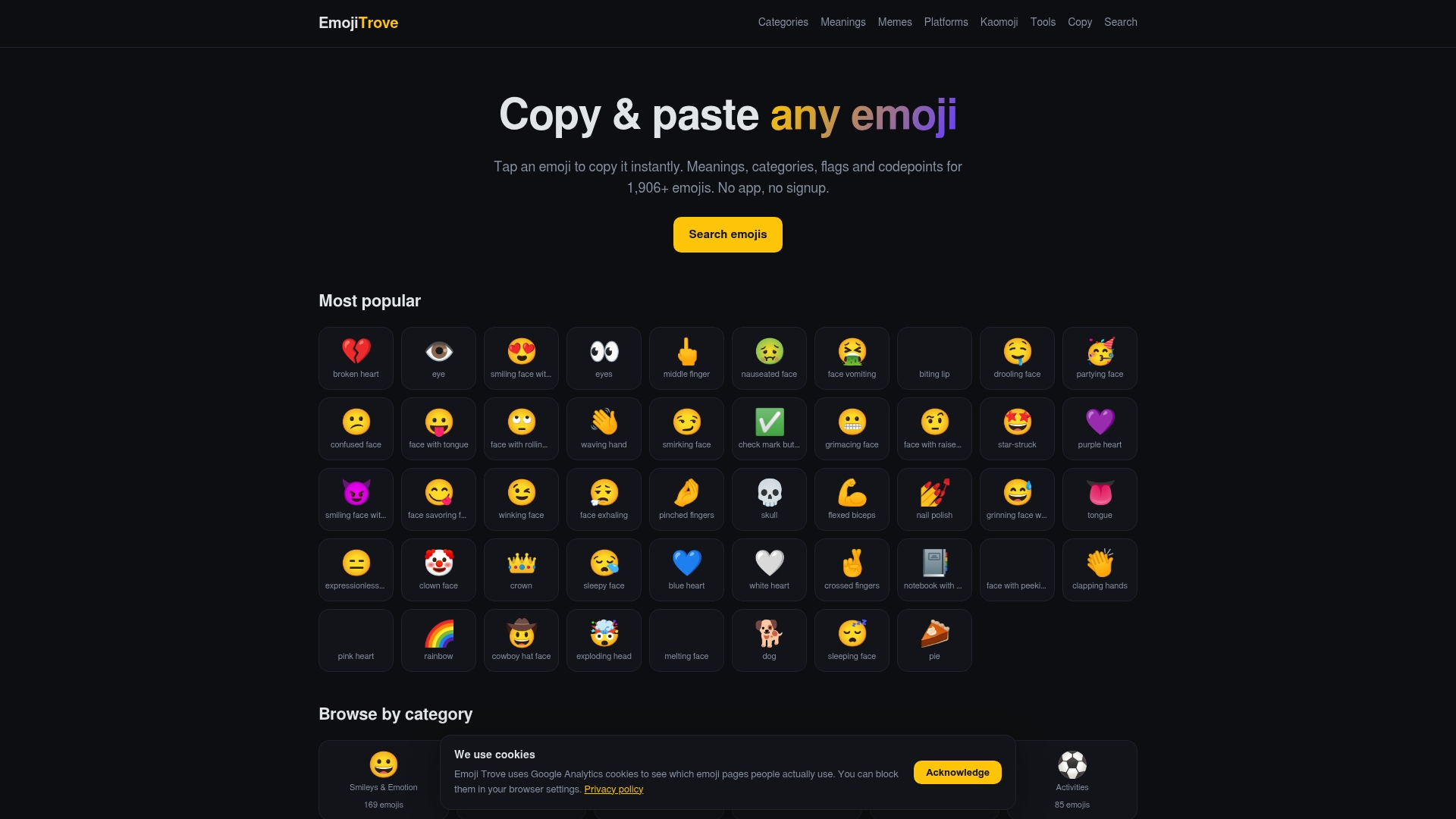
Three things make it worth a bookmark: fast search that returns exact matches instead of a full category scroll, dedicated platform pages showing how a given emoji renders across iOS, Android, and desktop before you send it, and a full meanings hub for when you need the context behind a symbol beyond what fits in a quick list. If you’re building out combos regularly, the emoji tools section also has text generators and translators for turning a plain caption into something more visually distinct. Next time you need a bloom, skip the keyboard grid and search it directly.
Sources
- Add flair to your email with emojis | Microsoft Support
- How to Insert Emoji in Outlook Emails
- How To Insert Emojis In A Microsoft Outlook Email - Techdows
- 22 Emojis That Look Completely Different on Different Phones
- How does the use of emojis and abbreviations impact professionalism and individual reputations in the workplace?
FAQ
What does 🥀🥀🥀 mean?
Repeated wilted flower emojis almost always signal heartbreak, sadness, or something that has faded, often used in captions about a breakup or a difficult stretch of time.
What is this flower emoji 🌼 called?
Its official Unicode name is “Blossom,” though most people casually refer to it as the daisy emoji because of its yellow center and white petals.
What does 🌺 mean in text?
Hibiscus typically signals tropical warmth, vacation energy, or celebration rather than romance, making it common in beach photos and summer captions.
What is the 🌷 emoji, and how is it different from 🌹?
The tulip signals quiet affection, spring, and understated elegance, while the rose carries stronger romantic and passionate weight; both work for affection, but tulip reads softer.
How do I insert a flower emoji in an Outlook subject line?
On Windows, press Win + . to open the system emoji picker directly in the subject field; on Mac, use Control + Command + Space to open the Character Viewer.
Can I search for flower emojis instead of scrolling my keyboard?
Yes. Emojitrove’s emoji copy and paste tool lets you search by name and copy the exact glyph instantly, which is faster than browsing a phone keyboard’s Nature category.